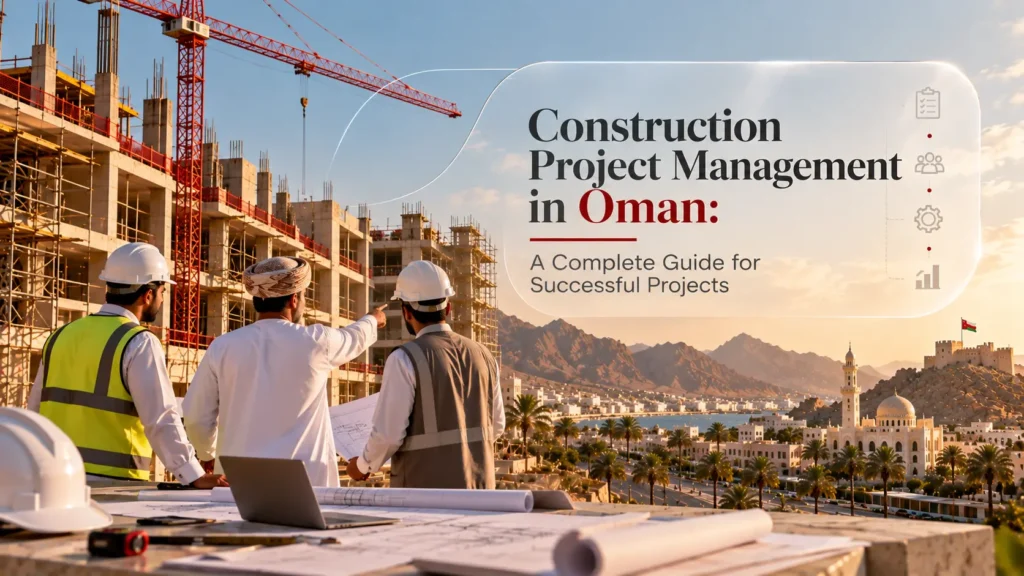
Managing a construction project requires much more than completing the physical building work. From initial planning and budgeting to procurement, scheduling, quality control, safety, communication, and final handover, every stage needs careful coordination.
This is where construction project management in Oman becomes essential.
A well-managed construction project brings together clients, architects, engineers, consultants, contractors, subcontractors, suppliers, and site teams to work toward the same objectives.
Whether the project is a residential development, commercial building, hospitality project, or industrial facility, effective project management can help improve coordination, control costs, reduce unnecessary delays, maintain construction quality, and keep the project moving toward completion.
In this guide, we explain what construction project management involves, why it is important in Oman, the main stages of managing a construction project, common challenges, and how to choose the right construction project management partner.
What Is Construction Project Management?
Construction project management is the process of planning, coordinating, supervising, and controlling a construction project from its initial planning stage through completion and handover.
A construction project manager may be responsible for coordinating:
- Project scope
- Construction schedules
- Budgets
- Procurement
- Contractors
- Subcontractors
- Consultants
- Architects
- Engineers
- Materials
- Quality control
- Safety
- Client communication
- Project documentation
- Final handover
The main objective is to ensure that the project is delivered according to its agreed scope, budget, schedule, quality requirements, and specifications.
Effective project management is also an important part of working with a reliable construction company in Oman, particularly when a project involves multiple contractors, consultants, suppliers, and construction teams.
Why Is Construction Project Management Important in Oman?
Construction projects can involve significant financial investment and many different stakeholders.
Without effective project management, even a well-designed project can experience:
- Construction delays
- Budget increases
- Procurement problems
- Communication gaps
- Coordination conflicts
- Quality issues
- Rework
- Safety problems
- Unclear responsibilities
- Difficult project handover
Professional construction project management in Oman provides a structured approach for managing these different elements.
A project manager helps connect the different parts of the construction process so that decisions made during planning, procurement, and construction remain aligned with the overall project objectives.
For this reason, choosing an experienced construction contractor in Oman can play an important role in maintaining project quality, schedule, safety, and cost control.
What Does a Construction Project Manager Do?
A construction project manager acts as one of the central coordination points throughout the project.
The exact responsibilities depend on the project’s size and scope, but project management generally covers planning, scheduling, cost control, coordination, quality, safety, communication, and completion.
Project Planning
Planning establishes the foundation for the entire project.
Before construction begins, the project team needs to understand:
- Project objectives
- Scope of work
- Required facilities
- Budget
- Expected timeline
- Resources
- Stakeholders
- Potential risks
A detailed project plan helps establish clear expectations before construction activities begin.
Schedule Management
Construction projects consist of activities that depend on one another.
For example, certain structural works need to be completed before mechanical, electrical, or finishing activities can begin.
Schedule management involves identifying these dependencies, establishing milestones, monitoring progress, and responding to delays.
A realistic construction schedule can help the project team understand what needs to happen, when it needs to happen, and which activities could affect the overall completion date.
Budget and Cost Management
Cost control is another important part of construction project management.
The project team may monitor:
- Materials
- Labor
- Equipment
- Procurement
- Subcontractors
- Variations
- Additional work
- Unexpected expenses
Regular cost monitoring can help identify potential budget issues before they become major problems.
Contractor and Subcontractor Coordination
Large construction projects can involve many specialist contractors and subcontractors.
Project management helps coordinate their activities and responsibilities so that different teams can work according to an organized schedule.
This is particularly important when the work of one contractor depends on another contractor completing a previous stage.
Client Communication
Clients need clear information about what is happening on their project.
Effective communication can include:
- Progress reports
- Site meetings
- Schedule updates
- Cost updates
- Quality reports
- Change requests
- Procurement updates
- Risk notifications
Clear communication gives clients better visibility and allows important decisions to be made at the right time.
Main Stages of Construction Project Management
A successful construction project typically follows several important stages.
Project Initiation
The project begins by defining the overall objectives, requirements, and expected outcomes.
At this stage, the project team may establish:
- Project goals
- Scope
- Initial budget
- Required facilities
- Key stakeholders
- Expected timeline
A clear project brief can reduce misunderstandings during later stages.
Planning and Pre-Construction
Pre-construction planning is one of the most important stages of the project.
It may include:
- Site assessment
- Design coordination
- Cost planning
- Procurement planning
- Construction scheduling
- Risk assessment
- Resource planning
- Contractor coordination
Mushtaq Ahmed LLC describes its construction approach as beginning with understanding the client’s goals and vision, followed by proposal development, planning and logistics, project kickoff, construction, and completion.
You can learn more about the company’s construction process to understand how these stages are organized.
Procurement
Procurement involves obtaining the materials, equipment, and services required for construction.
Procurement planning should consider:
- Material specifications
- Supplier availability
- Lead times
- Delivery schedules
- Cost
- Quality
- Storage requirements
Late procurement of critical materials can have a direct impact on the construction schedule.
For this reason, procurement should be coordinated with the project schedule rather than treated as a separate activity.
Construction Execution
Once planning and procurement are sufficiently advanced, construction activities can begin.
Project management during this stage focuses on:
- Site coordination
- Schedule monitoring
- Labor
- Materials
- Equipment
- Contractor performance
- Quality
- Safety
- Client communication
Regular monitoring allows potential problems to be identified before they affect later stages of construction.
Inspection and Quality Control
Quality should be monitored throughout construction rather than only during the final inspection.
Inspections can cover:
- Structural work
- Materials
- Installation
- Finishes
- Mechanical systems
- Electrical systems
- Plumbing
- External works
A structured quality-control process can reduce defects and minimize the need for expensive rework.
Project Completion and Handover
The final stage involves completing outstanding work, inspections, testing, documentation, corrections, and handover.
Before the project is handed over, the team may review:
- Completed works
- Defects
- Testing
- Documentation
- Approvals
- Client requirements
A well-organized handover helps ensure that the client receives the completed project with the necessary documentation and outstanding issues properly addressed.
Construction Project Management Checklist
A structured checklist can help project managers monitor the most important aspects of a construction project.
| Project Area | Key Considerations |
|---|---|
| Scope | Define exactly what will be delivered |
| Budget | Monitor costs and variations |
| Schedule | Track milestones and deadlines |
| Procurement | Ensure materials arrive when required |
| Quality | Inspect construction and materials |
| Safety | Monitor site safety procedures |
| Resources | Manage labor and equipment |
| Communication | Keep stakeholders informed |
| Risk | Identify and manage potential problems |
| Handover | Complete inspections and documentation |
Using a consistent checklist can make project monitoring more organized and help identify issues before they become more difficult to resolve.
How Project Management Helps Reduce Construction Delays
Construction delays can happen for many different reasons.
Common causes include:
- Late material delivery
- Design changes
- Poor coordination
- Procurement problems
- Subcontractor delays
- Site conditions
- Approval delays
- Unclear responsibilities
- Scheduling conflicts
Effective project management cannot eliminate every possible delay, but it can help identify risks earlier.
For example, if a critical material has a long procurement lead time, the project team can identify the requirement early and coordinate the order before the material becomes a schedule constraint.
Similarly, identifying dependencies between contractors can help prevent one delayed activity from affecting multiple stages of construction.
How Project Management Helps Control Construction Costs
Cost management begins before construction starts.
A project manager needs to understand the relationship between:
Scope → Design → Materials → Labor → Schedule → Cost
A change in one area can affect the others.
For example, changing a material specification may affect procurement, labor, installation, and potentially the construction schedule.
A structured project management process helps evaluate changes before they create unexpected financial consequences.
Important cost-management activities can include:
- Budget planning
- Procurement monitoring
- Variation control
- Resource management
- Progress tracking
- Cost reporting
- Scope control
The goal is not simply to reduce costs, but to maintain control over the project’s financial requirements while protecting quality.
The Role of Quality Control in Project Management
Quality management should be integrated into the entire construction process.
Material Quality
Materials should be checked against the project’s specifications before installation.
Workmanship
Construction teams should follow approved construction methods and quality requirements.
Inspections
Regular inspections can identify issues before they become more difficult or expensive to correct.
Documentation
Quality documentation creates a record of inspections, testing, approvals, and corrective actions.
Final Testing
Relevant systems should be tested before the project is completed and handed over.
A consistent quality-control system can improve the reliability, durability, and overall performance of the completed building.
The Role of Safety in Construction Project Management
Safety is an essential component of professional construction management.
Construction sites can involve:
- Heavy machinery
- Vehicles
- Electrical systems
- Elevated work
- Heavy materials
- Construction equipment
- Multiple teams working simultaneously
Project management should therefore include safety planning throughout the project.
Important safety practices can include:
- Worker orientation
- Safety training
- Personal protective equipment
- Site inspections
- Risk assessments
- Equipment safety
- Emergency procedures
- Safe work practices
- Ongoing monitoring
A construction project should not treat safety as a final requirement. It should be integrated into daily site operations.
Construction Project Management for Different Project Types
Project management requirements can vary significantly depending on the type of development.
Residential Projects
Residential projects may focus heavily on:
- Design quality
- Finishing
- Materials
- Client preferences
- Budget
- Construction schedule
For villas and residential developments, communication with the client can be particularly important because finishing and design decisions can influence the final result.
Commercial Projects
Commercial projects can include:
- Office buildings
- Retail spaces
- Hospitality developments
- Healthcare facilities
- Commercial buildings
Schedule management can be especially important because construction delays may affect business operations and planned occupancy.
Industrial Projects
Industrial projects often involve additional technical and operational requirements.
Project management may need to coordinate:
- Equipment
- Production requirements
- Warehousing
- Mechanical systems
- Electrical systems
- Logistics
- Safety
- Specialized construction
For a deeper look at the specific requirements of this sector, read our guide to industrial construction in Oman.
Mushtaq Ahmed LLC provides construction solutions for commercial and industrial clients, including new construction, renovations, tenant improvements, and start-up projects.
How to Choose a Construction Project Management Company in Oman
Choosing the right project management partner requires careful evaluation.
Experience
Look for a company with experience managing projects similar to yours.
Consider:
- Years of experience
- Project types
- Project size
- Technical complexity
- Previous clients
- Completed projects
Experience can help a project team identify potential problems earlier and develop practical solutions.
Project Portfolio
A company’s completed projects can demonstrate its practical capabilities.
When reviewing a portfolio, look for projects similar to yours in:
- Building type
- Scale
- Complexity
- Sector
- Quality requirements
You can review the Mushtaq Ahmed project portfolio to see examples of completed projects.
Technical Capabilities
Construction project management requires more than scheduling.
The project team should understand construction activities, engineering coordination, materials, quality, safety, procurement, and site operations.
Communication
Ask how the project team communicates with clients.
Important questions include:
- Who is the main point of contact?
- How often are progress updates provided?
- How are changes communicated?
- How are delays reported?
- How are decisions documented?
Quality Control
Understand how the project team manages quality.
Ask about:
- Inspections
- Material checks
- Testing
- Documentation
- Defect management
Safety
Ask about safety procedures, worker training, site inspections, risk management, and emergency procedures.
Transparency
A professional project management approach should provide clear information about:
- Progress
- Costs
- Risks
- Delays
- Changes
- Procurement
- Quality
Transparency allows clients to make better decisions throughout construction.
Construction Project Management vs. Construction Management
The terms construction project management and construction management are sometimes used interchangeably, but their scope can vary depending on the company and project.
| Construction Project Management | Construction Management |
|---|---|
| Focuses on managing the project as a whole | Often focuses heavily on construction execution |
| Includes planning and scheduling | Includes site and construction coordination |
| Can include budget management | Can include contractor coordination |
| Includes communication and reporting | Focuses strongly on construction activities |
| Includes risk and quality management | Includes quality and safety supervision |
The exact responsibilities should always be clearly defined before the project begins.
Common Construction Project Management Challenges in Oman
Every project has unique requirements, but some challenges can occur across different types of construction.
Procurement Delays
Materials with long lead times should be identified and planned for early.
Design Changes
Changes during construction can affect cost, schedule, materials, and labor.
Coordination Problems
Multiple contractors and subcontractors need to work according to an organized construction schedule.
Budget Variations
Changes in scope or unexpected site conditions can affect project costs.
Communication Gaps
Poor communication can lead to misunderstandings, delayed decisions, and coordination problems.
Quality Issues
Quality problems discovered late in construction can result in additional work and increased costs.
A strong project management process helps identify these issues as early as possible.
Why Work With an Experienced Construction Management Team?
Experience can make a significant difference when managing complex construction projects.
An experienced team can bring practical knowledge of:
- Construction planning
- Project scheduling
- Procurement
- Site coordination
- Quality management
- Safety
- Contractor management
- Client communication
- Project completion
Mushtaq Ahmed LLC has more than 40 years of presence in Oman’s construction field and more than 20 years operating under the Mushtaq Ahmed LLC name. The company also states that it has more than 240 skilled laborers and has completed and delivered more than 200 projects.
The company’s approach combines engineering, functionality, quality, and value while working with clients, consultants, and architects throughout the project lifecycle.
You can learn more about the company’s experience on the About Us page.
Frequently Asked Questions About Construction Project Management in Oman
What is construction project management?
Construction project management is the process of planning, coordinating, supervising, and controlling a construction project from initial planning through construction, completion, and handover.
Why is construction project management important?
It helps coordinate schedules, budgets, contractors, materials, quality, safety, communication, and project documentation, making the construction process more organized.
What does a construction project manager do?
A construction project manager can oversee planning, scheduling, procurement, contractor coordination, budget monitoring, quality, safety, communication, documentation, and project completion.
How does project management reduce construction delays?
Effective project management identifies dependencies, monitors schedules, coordinates contractors, tracks procurement, and identifies potential problems before they create major delays.
How does project management control construction costs?
It monitors project scope, procurement, labor, materials, variations, resources, and schedules to help identify cost risks and control changes.
Is project management necessary for small construction projects?
The level of project management required depends on the size and complexity of the project. Even smaller projects can benefit from clear planning, budgeting, scheduling, and communication.
What is the difference between a contractor and a project manager?
A contractor is generally responsible for executing construction work, while a project manager coordinates the broader project, including schedules, stakeholders, costs, quality, communication, and risks.
How do I choose a construction project management company in Oman?
Evaluate the company’s experience, previous projects, technical capabilities, communication process, quality-control systems, safety procedures, project management approach, and ability to manage projects similar to yours.
What information should a project manager provide to the client?
Depending on the project, clients may receive updates about construction progress, schedules, costs, quality, risks, procurement, changes, and upcoming activities.
Can project management improve construction quality?
Yes. Regular inspections, clear specifications, documentation, coordination, and quality-control procedures can help identify issues earlier and reduce rework.
Conclusion
Effective construction project management in Oman provides the structure needed to coordinate the many different elements involved in a construction project.
From initial planning and budgeting to procurement, construction, quality control, safety, communication, and final handover, each stage requires careful coordination.
Choosing an experienced project management and construction team can help clients manage complexity, improve communication, control risks, and work toward successful project completion.
For residential, commercial, hospitality, and industrial developments, professional project management can provide greater structure and visibility throughout the construction process.
If you are planning a construction project in Oman, you can contact Mushtaq Ahmed LLC to discuss your project requirements and explore suitable construction solutions.