Building a villa in Muscat is one of the largest investments most families will ever make. The result depends less on the day construction starts and more on the decisions taken before it: the design, the approvals, the specification and the choice of contractor. A well-prepared project runs smoothly. A poorly prepared one drifts in cost and schedule from the first month.
This guide explains how villa construction works in practice. You will see the stages from design to handover, what to prepare in advance, what drives cost and timeline, the mistakes to avoid and how to choose the right contractor.
In short: a villa project moves through design and approvals, tendering, site preparation and foundations, structure and blockwork, building services, finishing, and external works and handover. A qualified general contractor manages these stages and coordinates your consultant, architect and subcontractors, so that materials, documentation, progress and cost stay under control.
What Villa Construction Involves
Villa construction covers everything required to turn an approved design into a finished, habitable home. It includes site preparation, foundations, the reinforced concrete structure, walls, roofing, electrical and plumbing systems, air-conditioning, finishing and external works such as boundary walls and landscaping.
The logic is the same whether you are building a single family villa, a group of villas for a client or a full townhouse community. The difference is scale. Larger developments need stronger planning, more workforce, more equipment and tighter site management, because small delays multiply across many units.
Types of Villa Projects
A Single Private Villa
Built for one owner on one plot, usually with a custom design. The owner is closely involved in decisions, so clear communication and early design decisions matter most.
A Group of Villas or a Villa Community
Built for a developer or investor. Repetition helps efficiency, but it also means that one design error is repeated many times, so documentation and quality control must be strict.
Townhouses and Residential Buildings
Villa-style units built in rows, or low and mid-rise residential buildings. These need coordination of shared structure, services and external works. If your development also includes shops or offices, see our guide to commercial building construction in Oman.
Before You Start: What to Prepare
Strong projects start with preparation. Before you appoint a contractor, make sure you have the following in place.
- A clear brief. Write down the number of bedrooms, floors, family needs, parking, outdoor space and budget range. A vague brief produces vague quotations.
- Land documents. Confirm ownership documents, plot boundaries and any restrictions on the plot.
- A consultant and architect. A qualified consultant prepares drawings and specifications that every contractor can price on the same basis.
- A realistic budget. Include a reserve for variations. Few projects finish without some change.
- A decision timeline. Decide when you must approve layout, materials and finishes, so choices are not made under pressure on site.
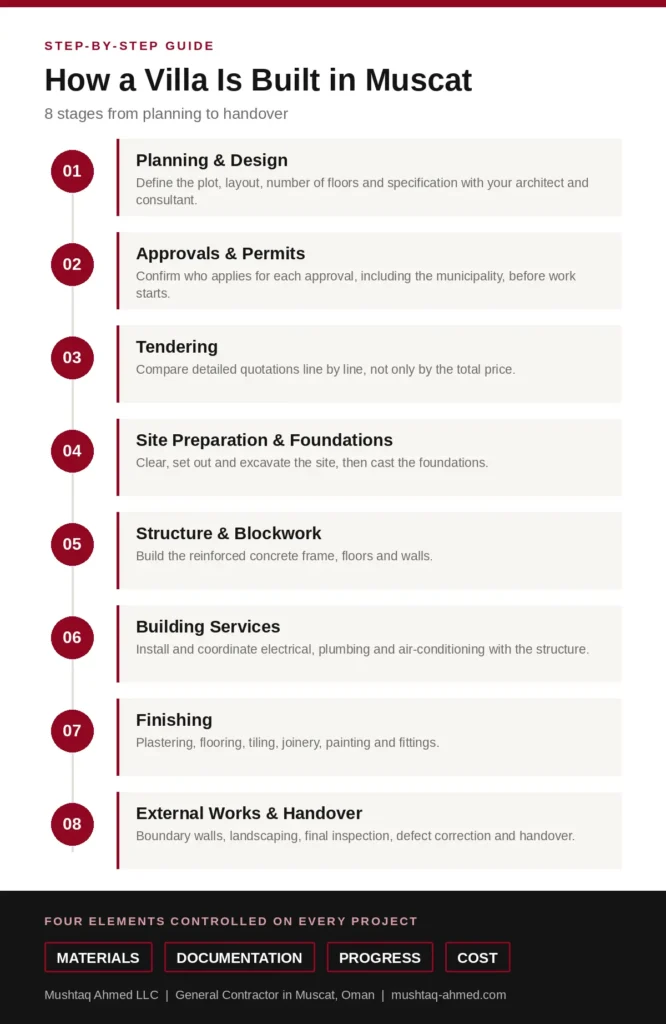
The 8 Stages of Building a Villa
1. Planning and Design
Work with an architect and consultant to define the plot, layout, number of floors, structural system and specification. Decisions made here have the biggest influence on the final cost. A change on paper is cheap. The same change after the structure is built can be very expensive.
2. Approvals and Permits
Building approvals are required from the relevant authorities, including the municipality. Confirm in writing who is responsible for each application, who follows up and who pays any fees. Delays in approvals are one of the most common reasons a villa project starts late, so begin this stage early. Our guide to choosing a building contractor in Muscat explains the permit process in more detail.
3. Tendering and Contractor Selection
Request detailed quotations from qualified contractors and compare them line by line, not only by total price. A low total can hide missing items. Ask for a bill of quantities, a list of exclusions and a written programme. Our guide on how to choose the best construction contractor in Oman explains what to check before you sign.
4. Site Preparation and Foundations
The site is cleared, set out and excavated, and the foundations are cast. Accurate setting out, material testing and inspection records are essential, because everything built later rests on this work. Errors here are hard to correct once the structure is up.
5. Structure and Blockwork
The reinforced concrete frame, floors and walls are built. Formwork, scaffolding and props support the work while the concrete gains strength. A contractor with its own scaffolding, formwork and lifting equipment has more control over progress at this stage than one that depends entirely on hiring in equipment.
6. Building Services
Electrical, plumbing, drainage and air-conditioning work is installed and coordinated with the structure. Routes, openings and equipment locations should be planned before walls are closed. Fixing services after plastering is slow, untidy and costly.
7. Finishing
Plastering, flooring, tiling, joinery, painting, fixtures and fittings give the villa its final character. This is also where quality problems become most visible. Approve material samples before bulk orders are placed, and inspect finished areas against the agreed specification.
8. External Works and Handover
Boundary walls, driveways, landscaping and external services are completed. The contractor then carries out a final inspection, corrects defects and hands over the villa together with the documents set out in your contract. Agree the handover documents and the defects period before you sign, not at the end.
What Affects the Cost and Timeline of a Villa
No honest article can give you a single figure for how much a villa costs or how long it takes, because both depend on your project. These are the factors that matter most.
- Size and number of floors. More built area means more material, workforce and time.
- Design complexity. Irregular shapes, large spans and special features increase structural and finishing work.
- Specification of materials and finishes. The difference between standard and premium finishes is often larger than the difference in structure.
- Quality of design documents. Incomplete drawings lead to assumptions, variations and disputes.
- Changes after construction starts. These are the single biggest cause of cost increases and delays.
- Site conditions and access. Ground conditions, plot access and utilities affect the early stages.
- Management of the site and subcontractors. Coordination failures cause rework.
For a figure that fits your villa, ask each contractor for a detailed quotation based on the same drawings and specification.
How to Keep Cost, Quality and Schedule Under Control
The most reliable control method is to manage four elements from the first day to handover:
- Materials: approve specifications and samples early, and check deliveries against them.
- Documentation: keep drawings, approvals, inspection records and instructions current and traceable.
- Progress: compare actual progress with the written programme regularly and act quickly on delays.
- Cost: track expenditure and variations against the budget and report them to the client.
This is how Mushtaq Ahmed LLC approaches every project, from tendering and planning through construction and completion, working closely with clients, consultants and architects. To see how these controls work across a whole project, read our guide to construction project management in Oman.
Common Mistakes to Avoid
- Choosing only on price. The lowest quotation may leave out items that appear later as extras.
- Starting before the design is final. Changes during construction cost far more than changes on paper.
- Unclear responsibilities for approvals. Always name who handles each permit.
- No written programme. Without a timeline, delays are hard to measure or challenge.
- Skipping material approvals. Substitutions can reduce quality without being noticed.
- Ignoring site safety. Unsafe sites are usually badly managed sites, and accidents cause delay and cost.
- Agreeing handover terms too late. Define documents and the defects period in the contract.
Quality and Safety on a Villa Site
Quality Control
Quality control means that each stage is inspected and approved before the next one starts. Concrete work, reinforcement, waterproofing, services and finishes each have checks that should be recorded. Ask your contractor how inspections are carried out, who signs them off and how defects are corrected.
Site Safety
Good contractors maintain safe working practices across all their sites and apply strict engineering, safety and environmental standards throughout every stage of construction. As the owner, you can ask how the contractor trains and inspects on site, rather than accepting general statements.
Villa and Residential Projects in Our Portfolio
Mushtaq Ahmed LLC has built residential projects across Oman. Our portfolio includes a community of 40 residential villas in Mawaleh South, a 12,000 m² residential building in Ibra, and mid-rise residential buildings in Muscat such as Ghaim Azaiba Residential. Each project is managed with structured project management and quality-control procedures. You can see more on our projects page.
How to Choose the Right Contractor for Your Villa
Look for four things. First, relevant residential experience that you can verify, ideally by visiting a completed or ongoing project. Second, a named site management team that will be present on your project. Third, a written programme and a method for tracking cost and progress. Fourth, a quotation that clearly lists what is included and what is not.
Mushtaq Ahmed LLC is a first-grade construction company in Oman with more than 45 years of experience and a workforce of 256+. We also own scaffolding and props capacity, which gives us direct control over key stages of structural work. Read more about our construction process or learn about our company.
Frequently Asked Questions
Who manages the construction of a villa?
A general contractor manages the construction and coordinates subcontractors. Your consultant and architect supervise design intent and quality on your behalf, and you stay involved in key decisions and approvals.
Can I change the design during construction?
Yes, but changes after work begins usually affect cost and schedule. Agree the design and specification as fully as possible beforehand, and require written approval and pricing for every variation.
Should I appoint a separate consultant?
For most villa projects, yes. An independent consultant prepares drawings and specifications and checks quality, which protects your interests.
How many quotations should I request?
Three is a sensible number. It gives you a fair comparison without making the process too long. Give every contractor the same drawings and specification.
What documents should I receive at handover?
This depends on your contract. Agree the list in advance. Typically it includes completion and inspection records, as-built information and operating information for installed systems.
What is the difference between a general contractor and a construction management company?
A general contractor takes responsibility for building the project. A construction management company coordinates and oversees work on the client’s behalf. Some companies provide both.
Build Your Villa with Mushtaq Ahmed LLC
If you are planning a villa or a residential development in Oman, our team can review your requirements and guide you from planning through completion. Explore our construction solutions or talk to our team.